

Last week we ran an article about finding unusual and quirky geological features while on holiday. In this case it was one of our Directors, Geoff Beckett, and some limestone slabs which were being used as bordering and boundary markers for a historic Grade I listed building (Sedimentary Slabs Surprise GRM Director on Summer Stopover).
The article didn’t go unnoticed by other GRM team members, including Paige Colling, one of our Senior Engineering Geologists. Paige is no stranger when it comes to featuring in GRM news stories (see links at end of this article!), and on this occasion she was keen to share her geological observations from a recent break in Northern Ireland.
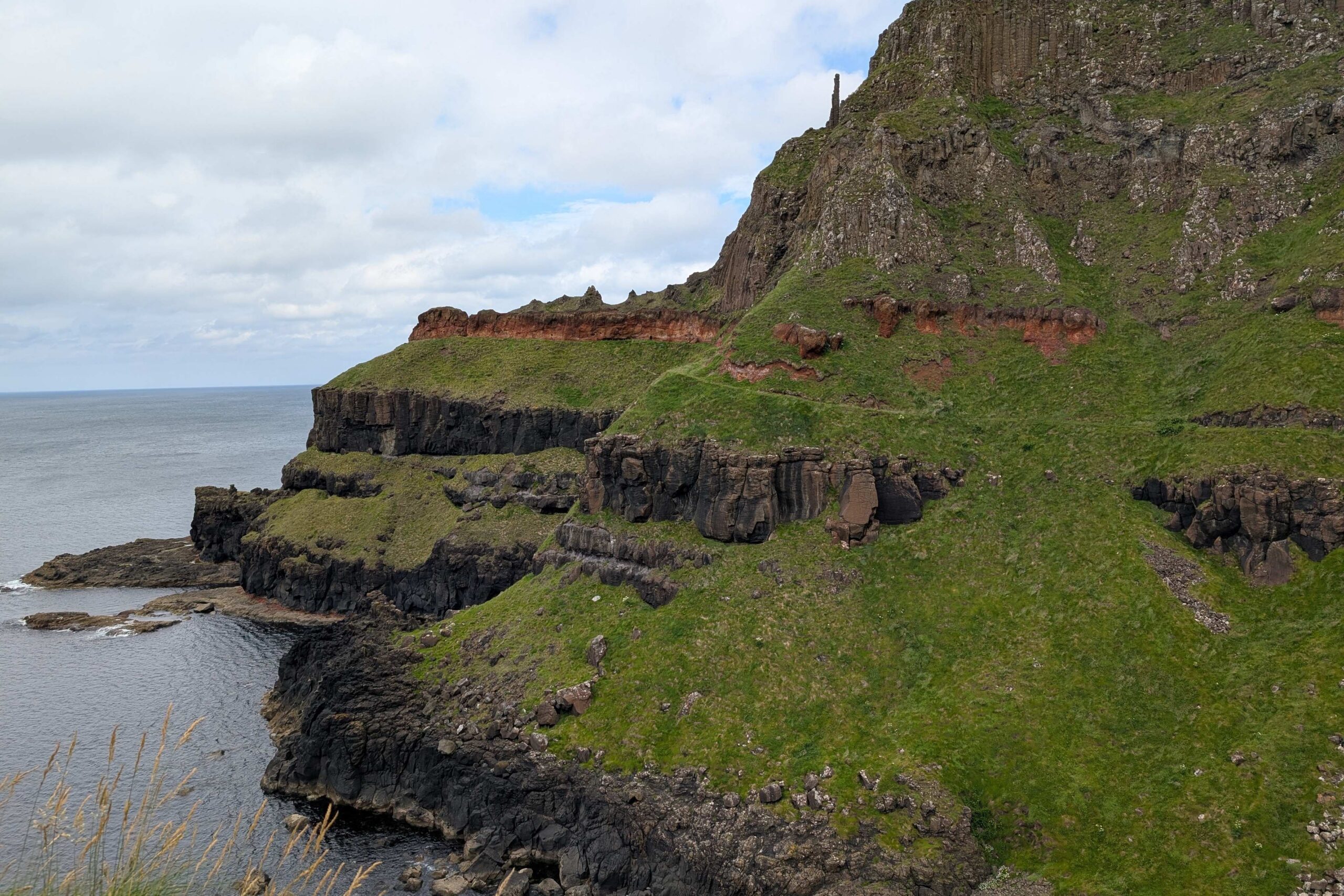
The iconic Giants Causeway on the Antrim coast is something of a pilgrimage site for geologists. It was also declared a World Heritage Site by UNESCO in 1986 and a national nature reserve by the Department of the Environment for Northern Ireland in 1987.
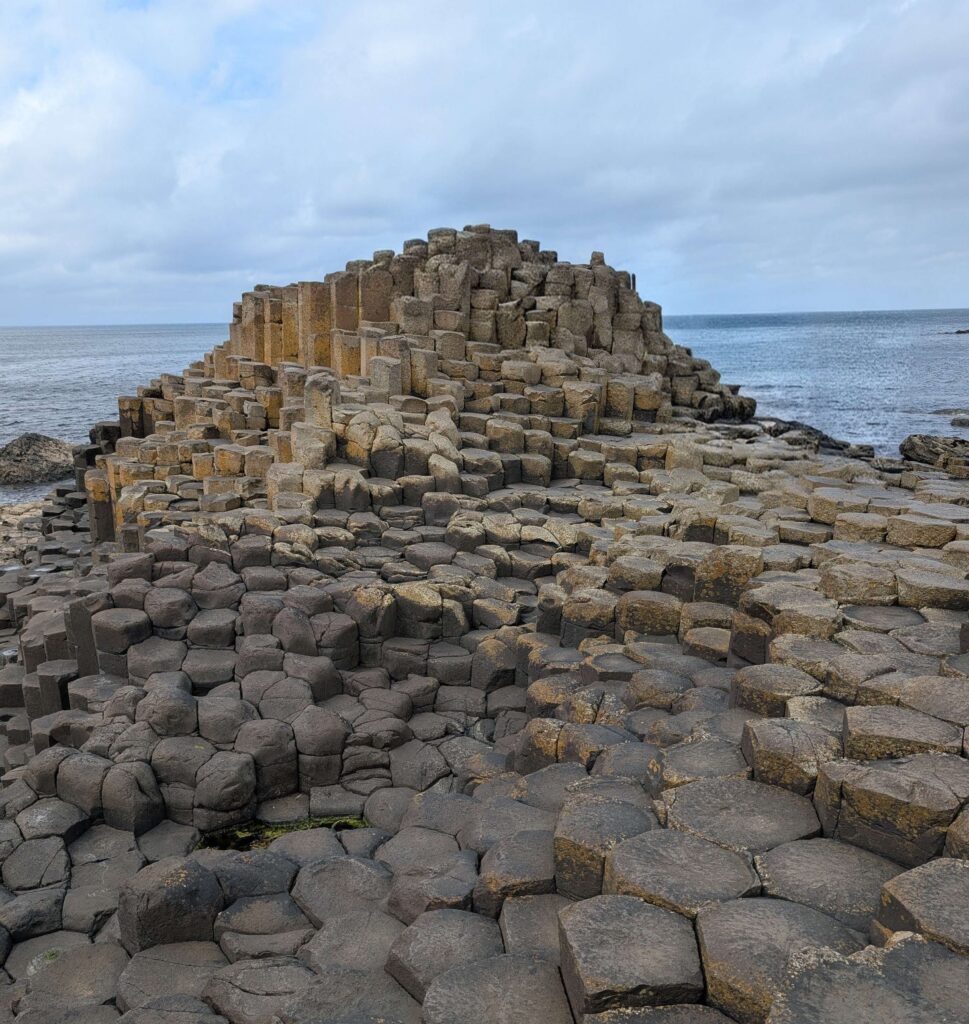
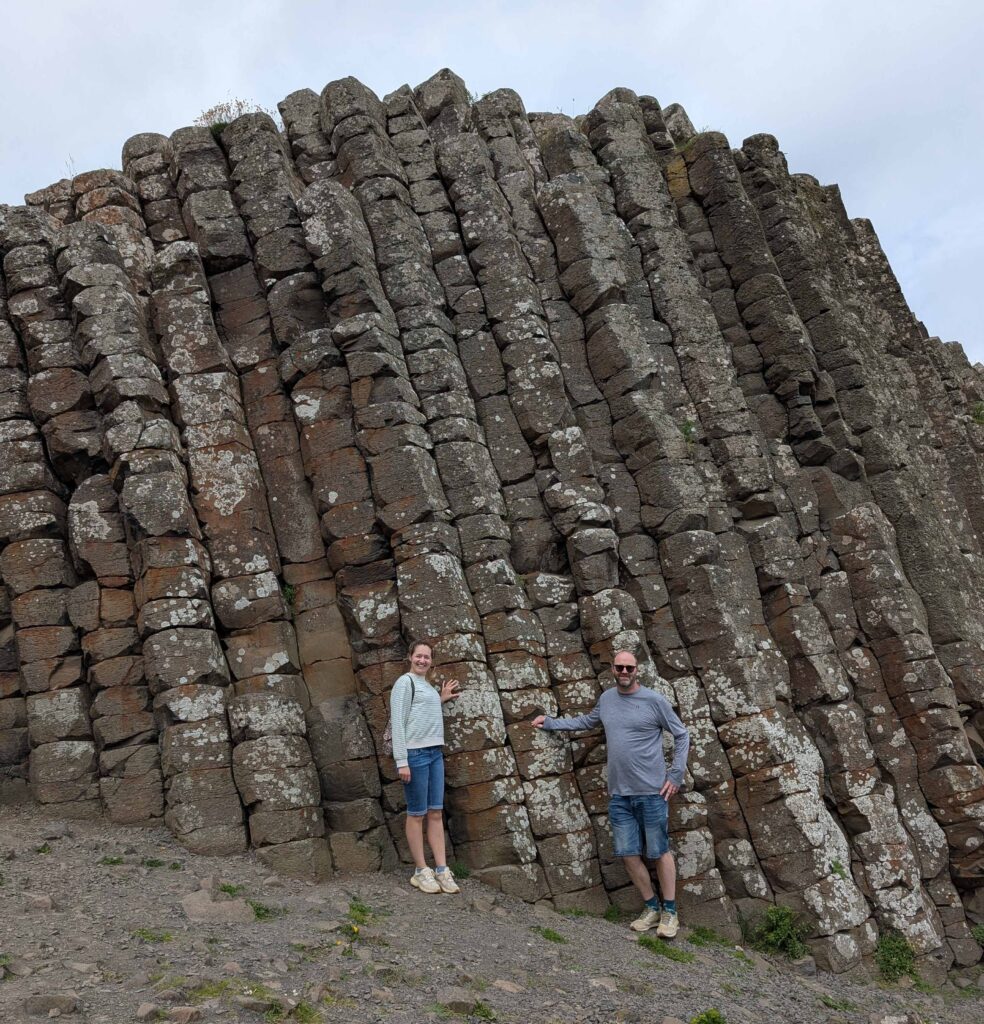
The 40,000 hexagonal columns of igneous basalt formed around 60 million years ago during a period of intense volcanic activity related to the opening of the Atlantic Ocean (before which North America and Europe were joined). This volcanism forced molten rock up through cracks in the earth creating vast lava flows which slowly cooled, contracted and solidified into the distinctive columnar jointing pattern seen today.
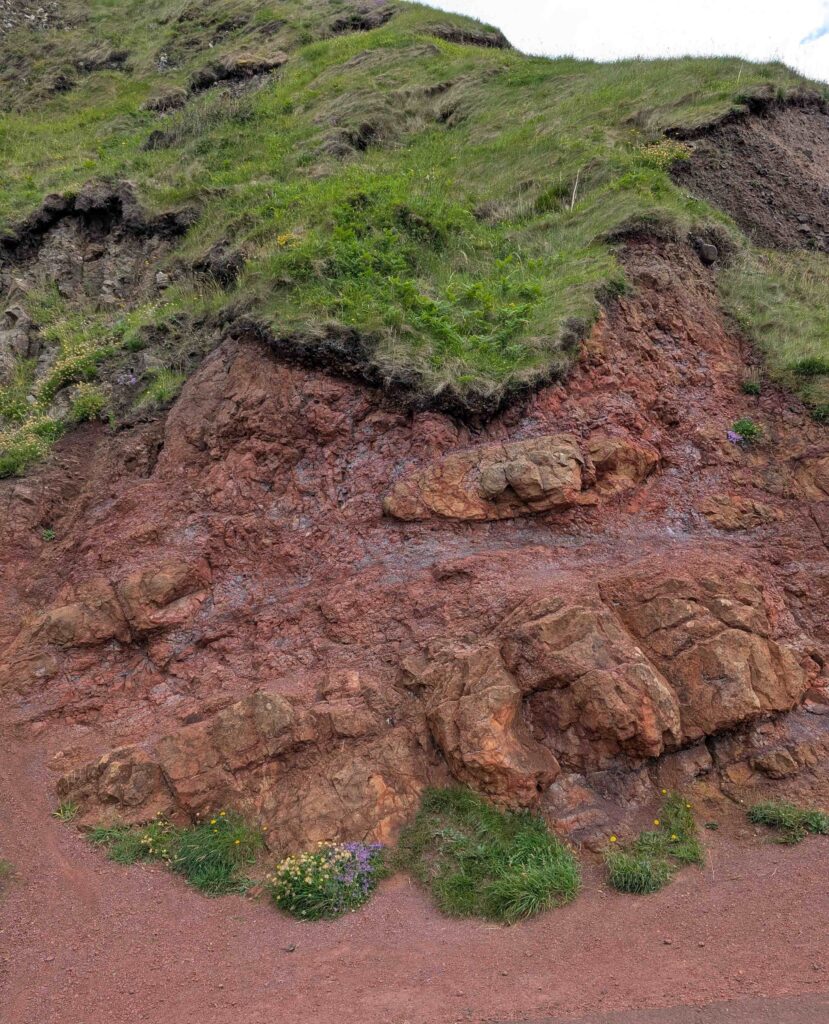
Paige also observed the lesser-known laterite layer between two of the lava flow episodes. This reddish orange rock formed during a period of weathering and erosion of the underlying basalt, producing the iron-rich sedimentary laterite deposits.
Thanks Paige for the pictures and insight! Here are a couple of the other articles that Paige has featured in over the past few years: