

The recent spell of hot weather is a reminder that the summer holiday season has arrived. Many of our GRM team will be taking time off over the next few months to relax and unwind, either here in the UK or further afield.
While we expect them to forget all about work, client projects, and avoid checking emails, all to often they find it hard not to notice interesting features, geological structures or landform quirks. Occasionally they can’t resist taking pictures and sending them back to us!
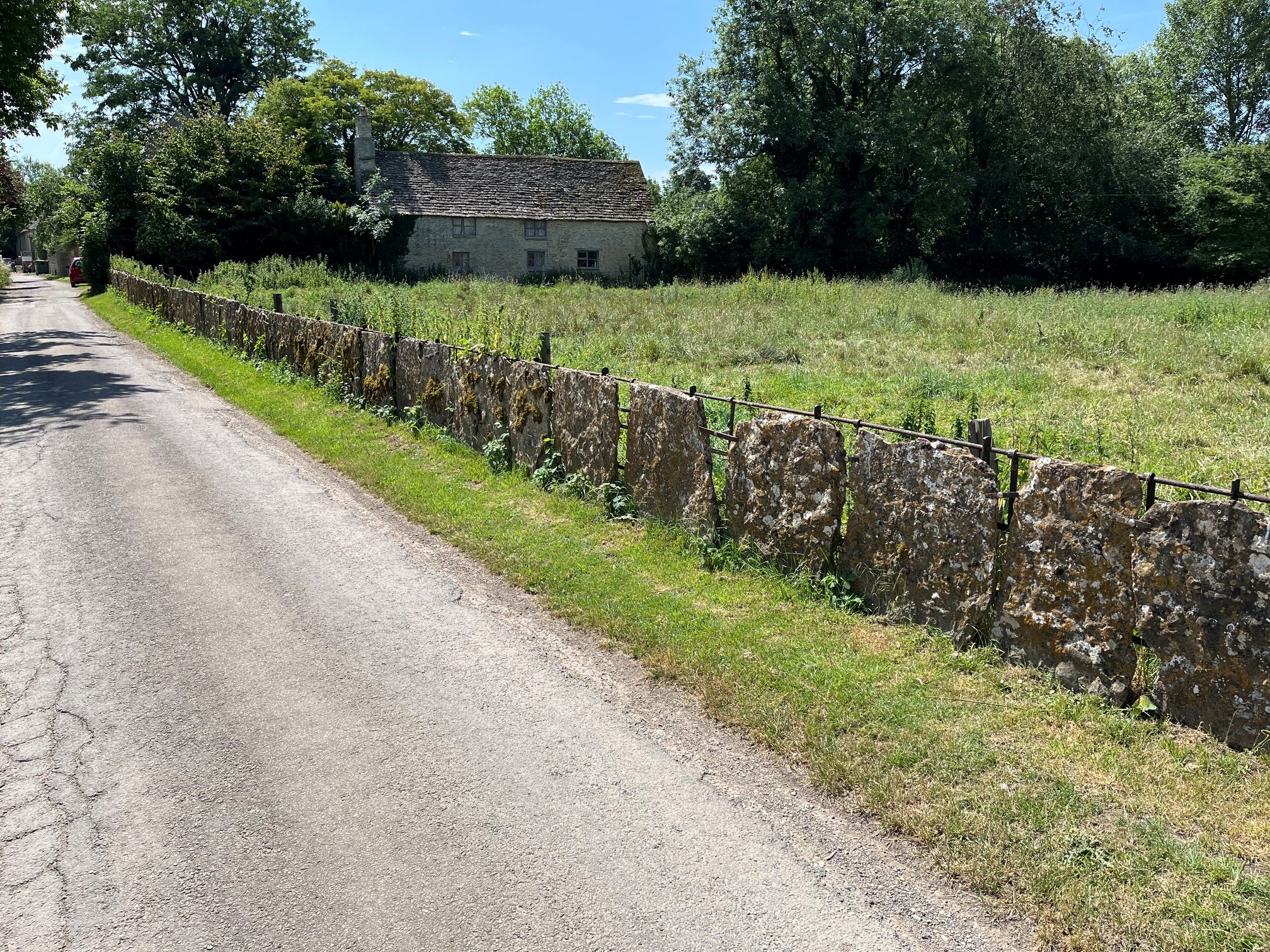
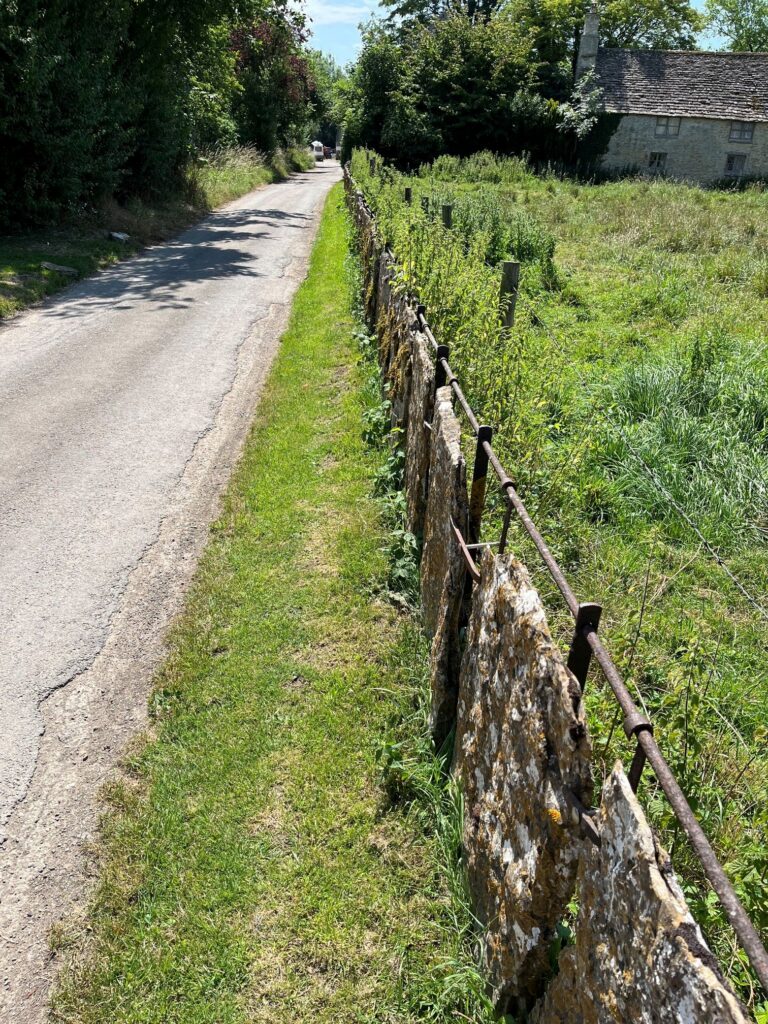
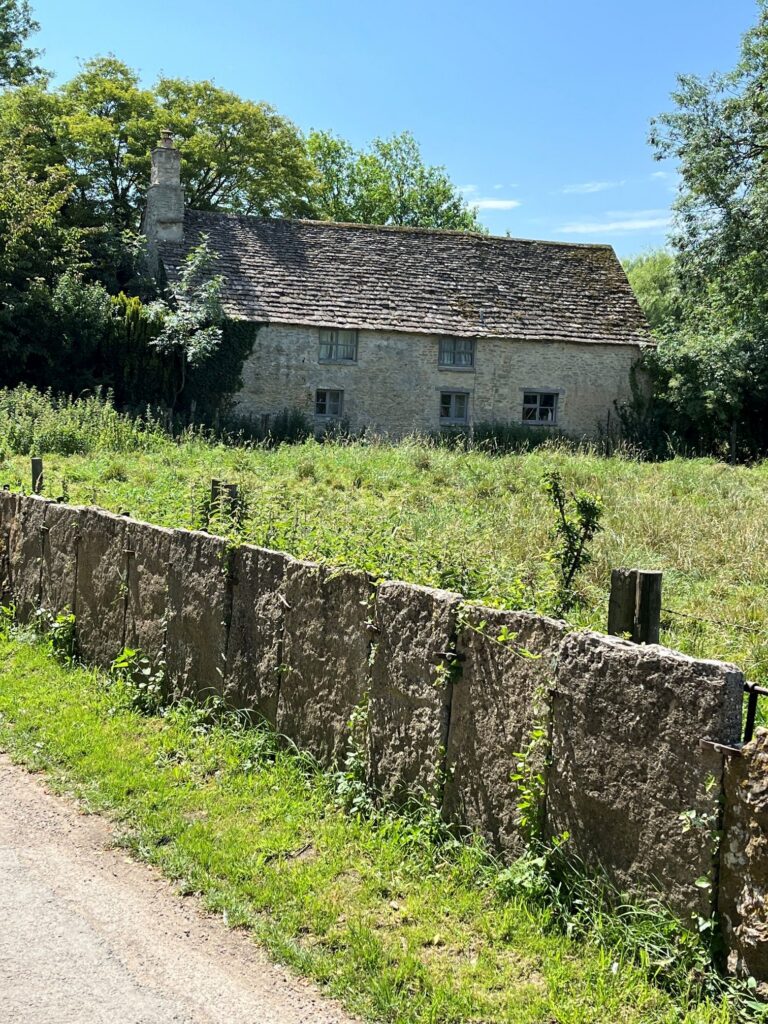
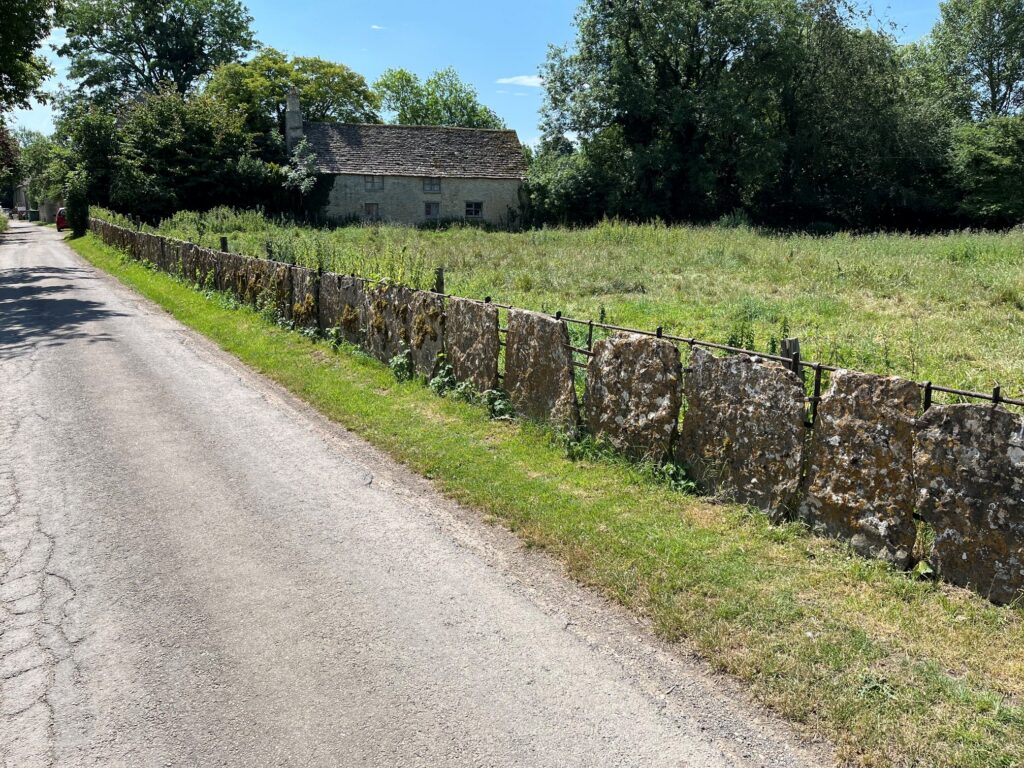
This was very much the case with one of our Directors, Geoff Beckett, who was holidaying ‘somewhere’ in the UK. He took the pictures below of unusual lichen-covered limestone slabs which were being used as bordering and boundary markers for a historic Grade I listed building.
This was the first time Geoff had seen sedimentary slabs used as fencing panels, and it turns out these are a famous architectural feature of this area – indeed they are Grade II listed themselves! The fencing showcases the innovative use of local materials, with the vertically placed limestone slabs linked with iron clamps.
But can you guess where Geoff was and which Grade I listed building he visited? A clue: It was built around 1570 and served as the country home of William Morris, the writer, designer, socialist, and father of the Arts and Crafts movement. Answer at the bottom beneath the images.
It is Kelmscott Manor in the Cotswolds village of Kelmscott, West Oxfordshire (GL7 3HJ). The manor house is open to the public on Thursdays, Fridays and Saturdays throughout the summer season. More information: https://kelmscottmanor.org.uk/