Continuous professional development and knowledge sharing are central to GRM’s culture. This applies not only to graduates and newer team members beginning their careers, but also to experienced staff looking to refresh and expand their knowledge of issues commonly encountered on development sites.
A key part of our training programme involves transferring knowledge and practical experience from senior team members. This may take the form of planned technical sessions or more informal opportunities to learn from real-world examples encountered during day-to-day activities.
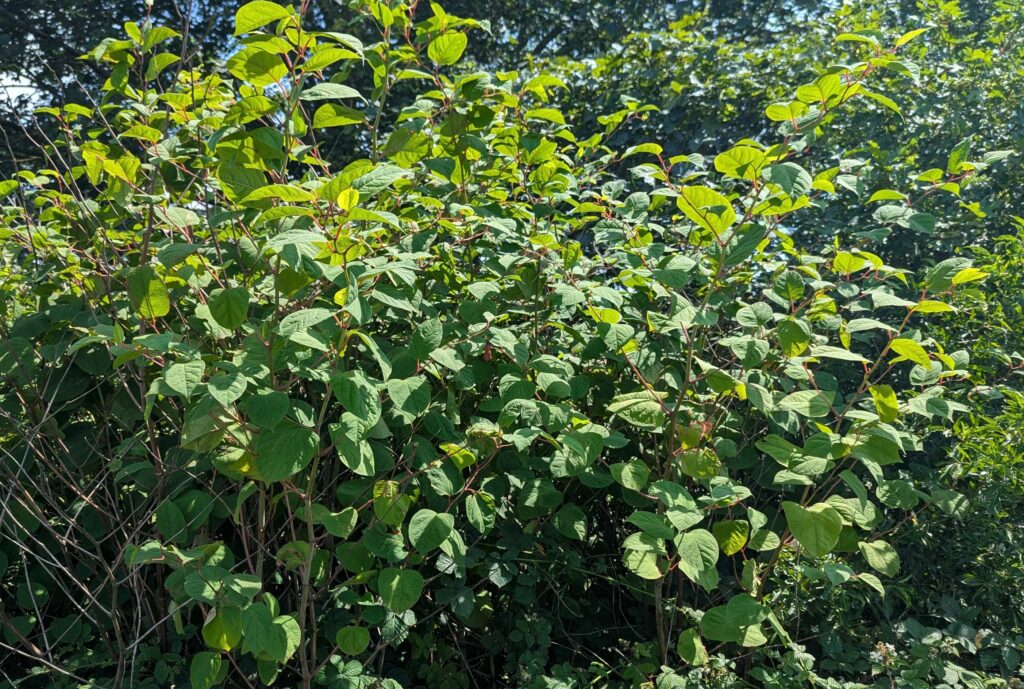
One such opportunity arose this week when George Salloway, Senior Geo-Environmental Scientist at GRM, identified a stand of Japanese Knotweed locally. Originally introduced to the UK as an ornamental garden plant, Japanese Knotweed is now recognised as one of the country’s most problematic invasive species and is subject to legal controls. Further information is available on the RHS website: https://www.rhs.org.uk/weeds/japanese-knotweed
Japanese Knotweed, along with other invasive and potentially hazardous species such as Giant Hogweed, is frequently encountered on brownfield land, unmanaged sites and railway embankments. Identifying and recording these species during site walkovers can be an important part of the development process, as their presence may create significant constraints for clients and redevelopment proposals.
Where Japanese Knotweed is identified on a development site, remediation and management requirements can result in substantial additional costs, restrictions on earthworks and soil movement, and delays to construction programmes. Early identification is therefore critical to understanding project risks, informing design decisions and helping clients avoid unexpected expenditure and programme impacts.
Similarly, Giant Hogweed presents a significant health and safety risk. Contact with the plant’s sap can cause severe skin irritation, blistering and burns when exposed to sunlight, making awareness and correct identification essential for anyone undertaking site inspections or fieldwork.
While specialist ecological advice may be required for detailed assessment, treatment or long-term management, practical awareness of invasive species remains an important part of supporting land development projects.
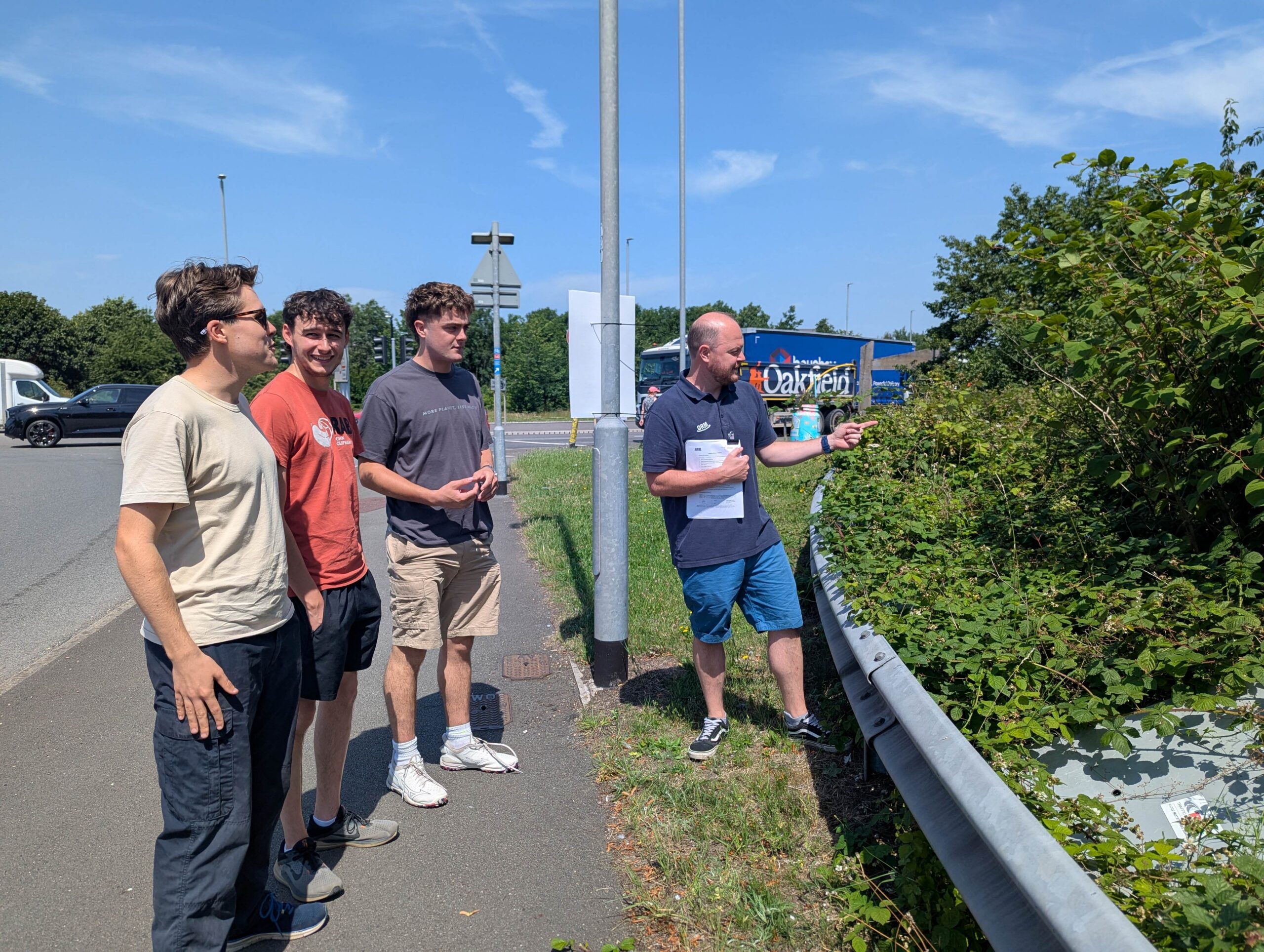
To reinforce this knowledge, George organised an impromptu field visit for two of GRM’s newer team members, Tom and Jobe, while also providing a useful refresher for James, who is involved in site-based work. Although the team are familiar with field investigations through their geology backgrounds, identifying invasive plant species rather than geological features provided a valuable and relevant learning experience.
This informal training session gave Tom and Jobe the opportunity to observe Japanese Knotweed first-hand, while providing James with a useful refresher on its implications for development and construction projects.
If you are planning a development or construction project, GRM can help identify potential ground-related and environmental constraints at an early stage, helping to minimise risk, avoid programme delays and reduce unexpected project costs. Please use your main point of contact at GRM or for new enquiries email richard.upton@grm-uk.com or call 01283 551249.