

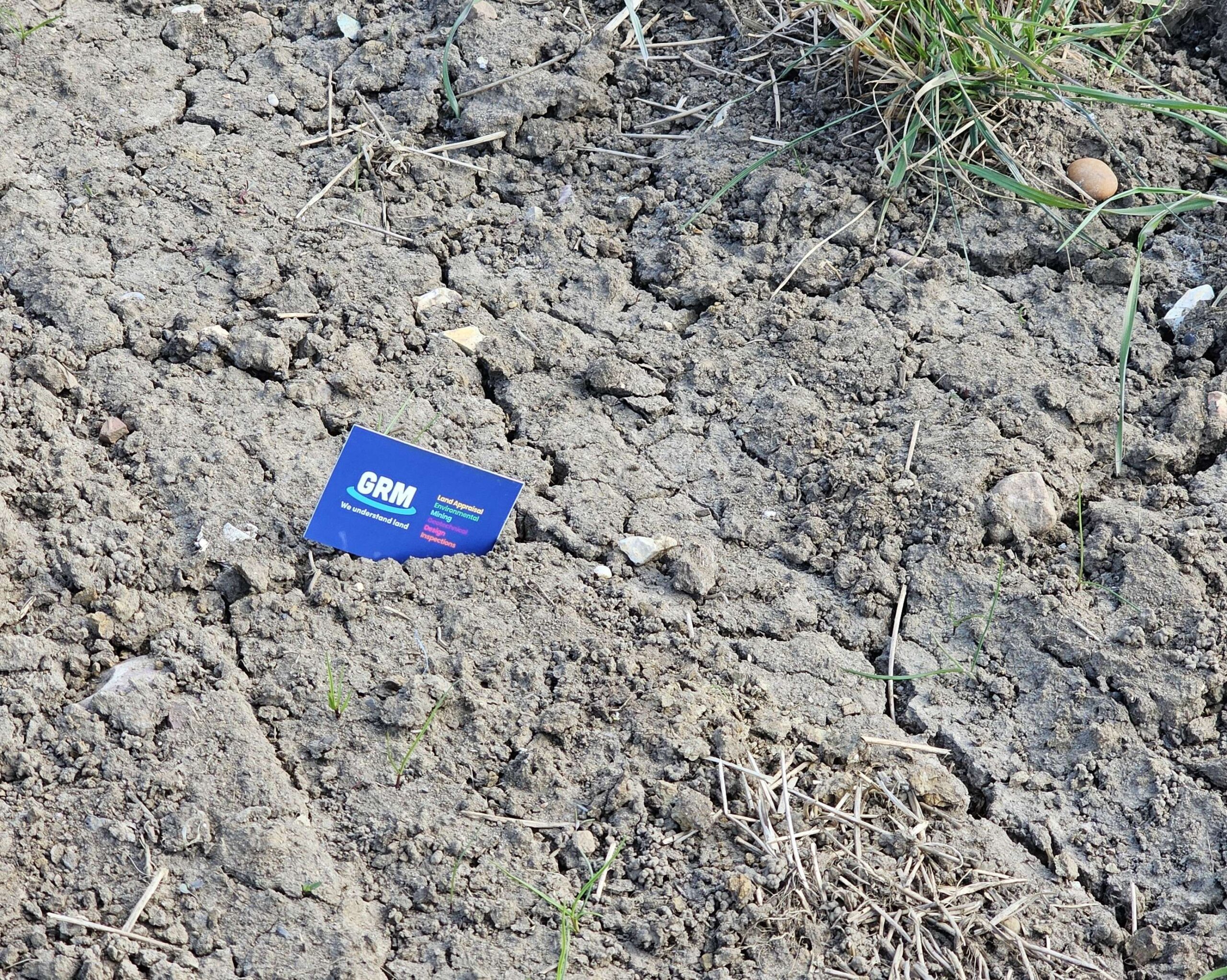
The sudden arrival of warmer weather over the last week and progressive increase in temperatures and humidity has been something of a ‘good news turning to bad news’ story for our field-based teams working on a wide range of land development projects!
Indeed, over the last few days it has been the GRM office-based teams who have had the last laugh, fortuitously working in our air-conditioned head office!
This first significant spell of warm weather has resulted in rapidly drying soils which can lead to drying-induced desiccation where cohesive soils are left exposed, for example after topsoil is stripped or where foundation excavations are left open in the hot sun. This is particularly the case for higher volume change potential clays, which are more susceptible to changes in moisture content, and is becoming more common due to the long-term changes in global climate.
NHBC Standards cater for the occurrence of seasonal desiccation by stipulating minimum foundation depths, which vary based on the volume change potential of the cohesive strata, but are up to 1m below original or proposed ground level, whichever is lowest. The stripping of topsoil prior to the onset of the warmer months can effectively result in the depth of seasonal desiccation becoming deeper, and the exposure of excavated foundation trenches to prolonged periods of hot sun can result in the surfaces of them becoming subject to additional seasonal desiccation. Both of these scenarios can result in foundations requiring deepening below typical minimum depth to ensure that the risk to structures from shrinkage and heave, such as the differential movement and cracking of foundations, walls and floor slabs, is managed.
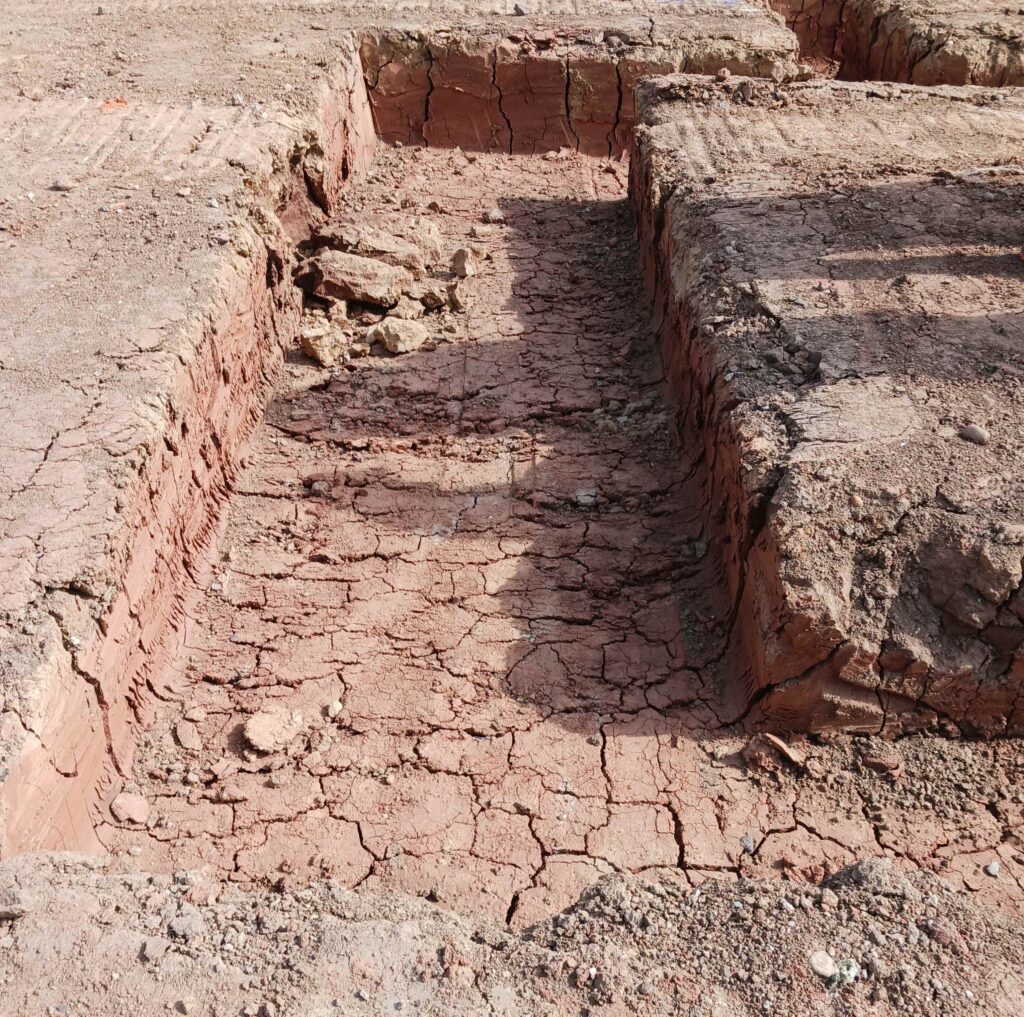
Where there is a perceived risk of typical minimum depth requirements being insufficient, desiccation testing can be undertaken to confirm the true depth of seasonal desiccation, thus allowing for safe bearing depths to be calculated for proposed structures.
However, this is not the only scenario where desiccation testing can be useful. It can also be used to determine the depth of tree influence in the engineer design zone for trees, where tree influence is assessed by NHBC as being greater than 2.5m, but is unknown. The determination of this can provide potential cost-effective alternatives to the use of piled foundations, such as deep traditional foundations or perhaps raft foundations, which can be incredibly useful when only a small number of structures are affected.
GRM can provide ground investigation, foundation design and site inspection services which can help manage the risks posed by tree influence or seasonal desiccation, as unnecessarily allowing for these, or recovering from the effects of them can be very costly.
If you have any development or construction projects, then please get in touch to find out how we can help save both time and costs. Please use your main point of contact at GRM or for new enquiries email richard.upton@grm-uk.com or call 01283 551249.